A Day on Donkey Mountain
The sandstone maze above the Wolgan Valley
-
Date walked: June 2022
Distance: 4.9 km
Elevation gain: 370 m
Grade: 4—5 (Off-track, steep climbs, thick regrowth, scrambling and route-finding required.)
Location: Gardens of Stone National Park
Maps: NSW Topographic 1:25,000, BEN BULLEN
Photography: All photographs by and © Sandstone Symphony.
Conditions: Visited not long after the 2019–20 bushfires. Extensive regrowth across parts of the mesa significantly affected access and navigation.
Notable features: The Green Room, the Grand Hall, pagoda complexes, slot canyons, lyrebird nests, rock orchids and expansive views across the Wolgan Valley.
The Wolgan Valley is defined less by mountains than by escarpments — immense sandstone walls and dissected tablelands stretching away across the Newnes Plateau.
Donkey Mountain is the exception.
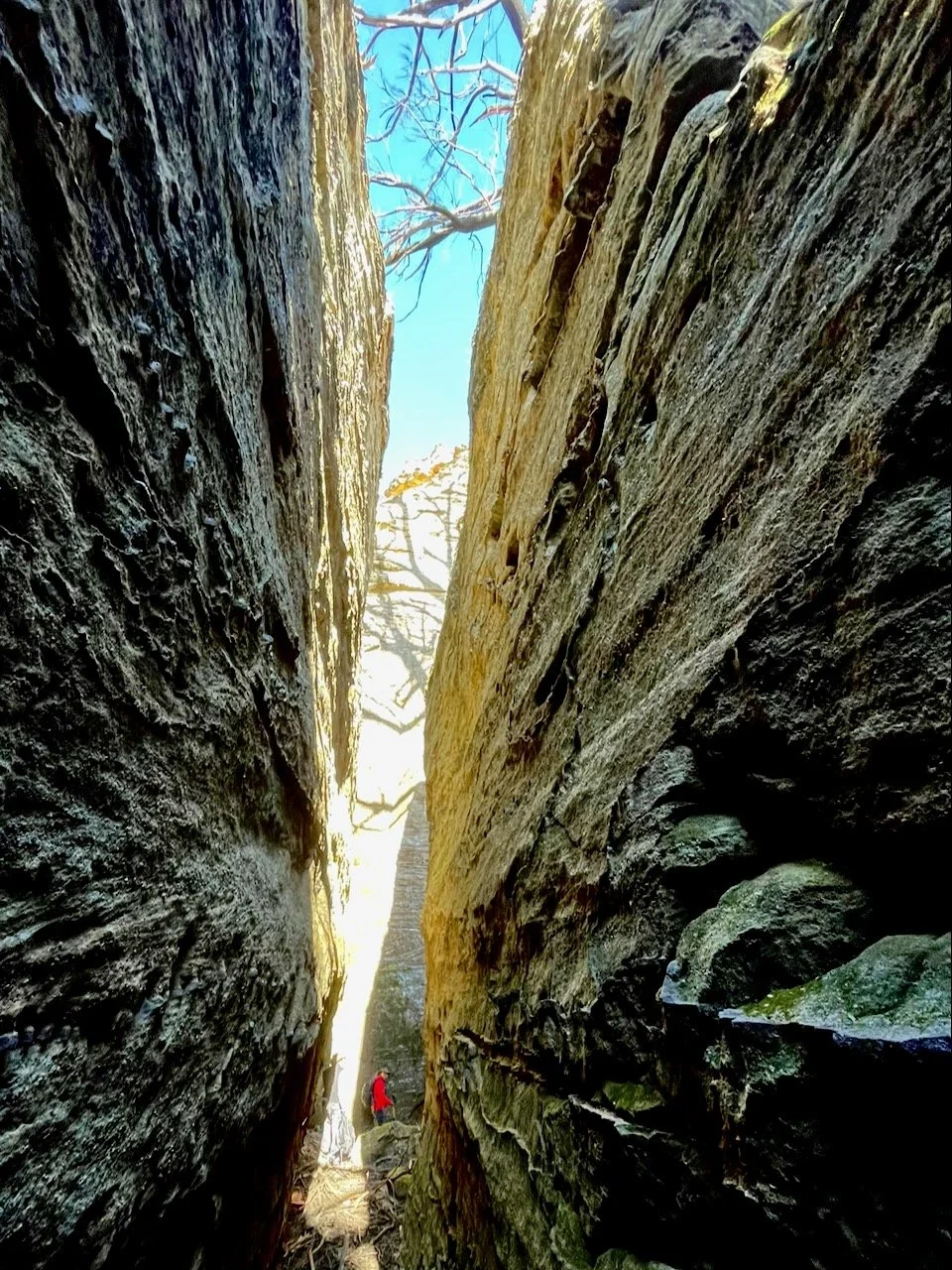
Rising abruptly from the valley floor in isolation from the surrounding plateau, it feels almost stranded within the valley itself: a compact mesa whose steep slopes conceal an intricate world of pagodas, tunnels, caves and narrow sandstone corridors above.
From below, little hints at what lies on top. The mountain’s sides are steep, forested and unremarkable compared with the escarpment above. It is only after climbing onto the summit that the landscape begins to unfold — an elevated maze of sandstone chambers and hidden passageways seemingly protected from the outside world by the mountain’s enclosing cliffs.
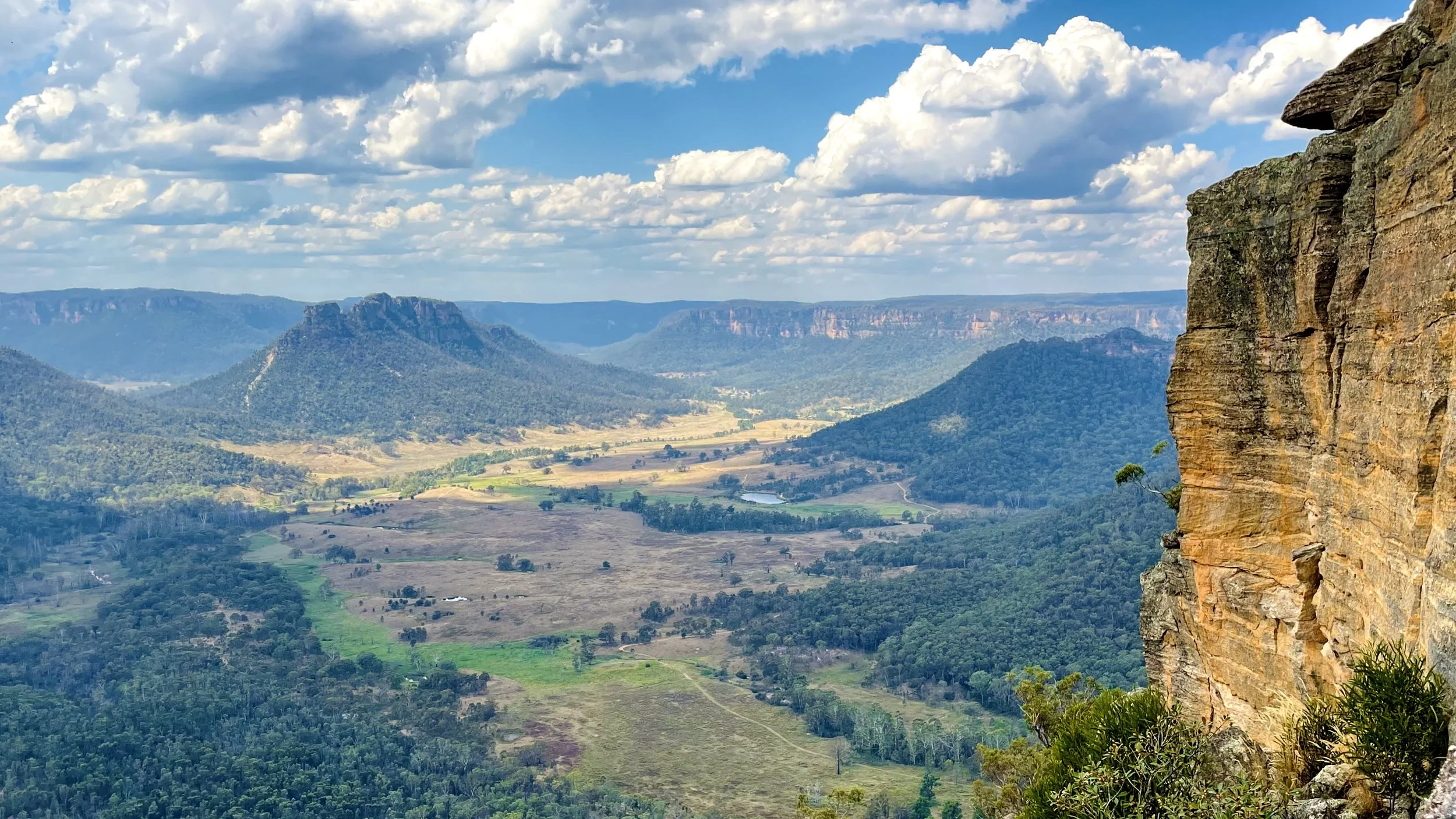
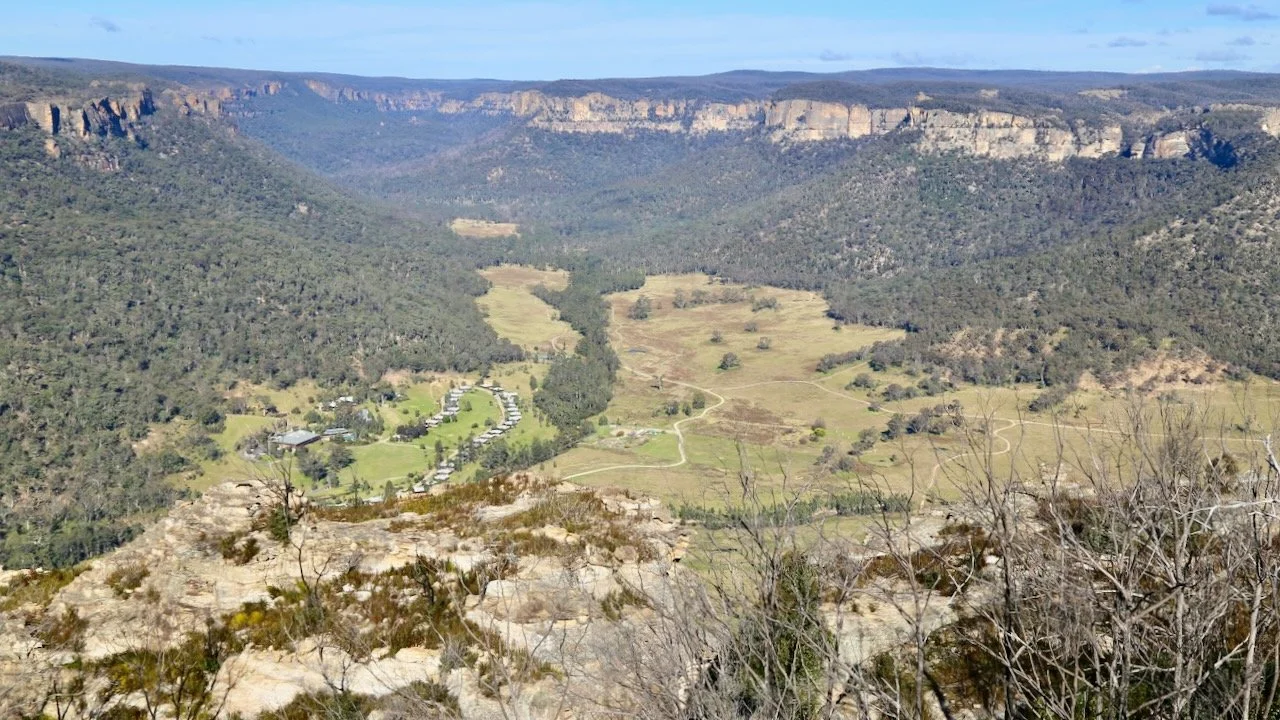
The Wolgan Valley viewed from Cape Pinnacle, Donkey Mountain middle left.
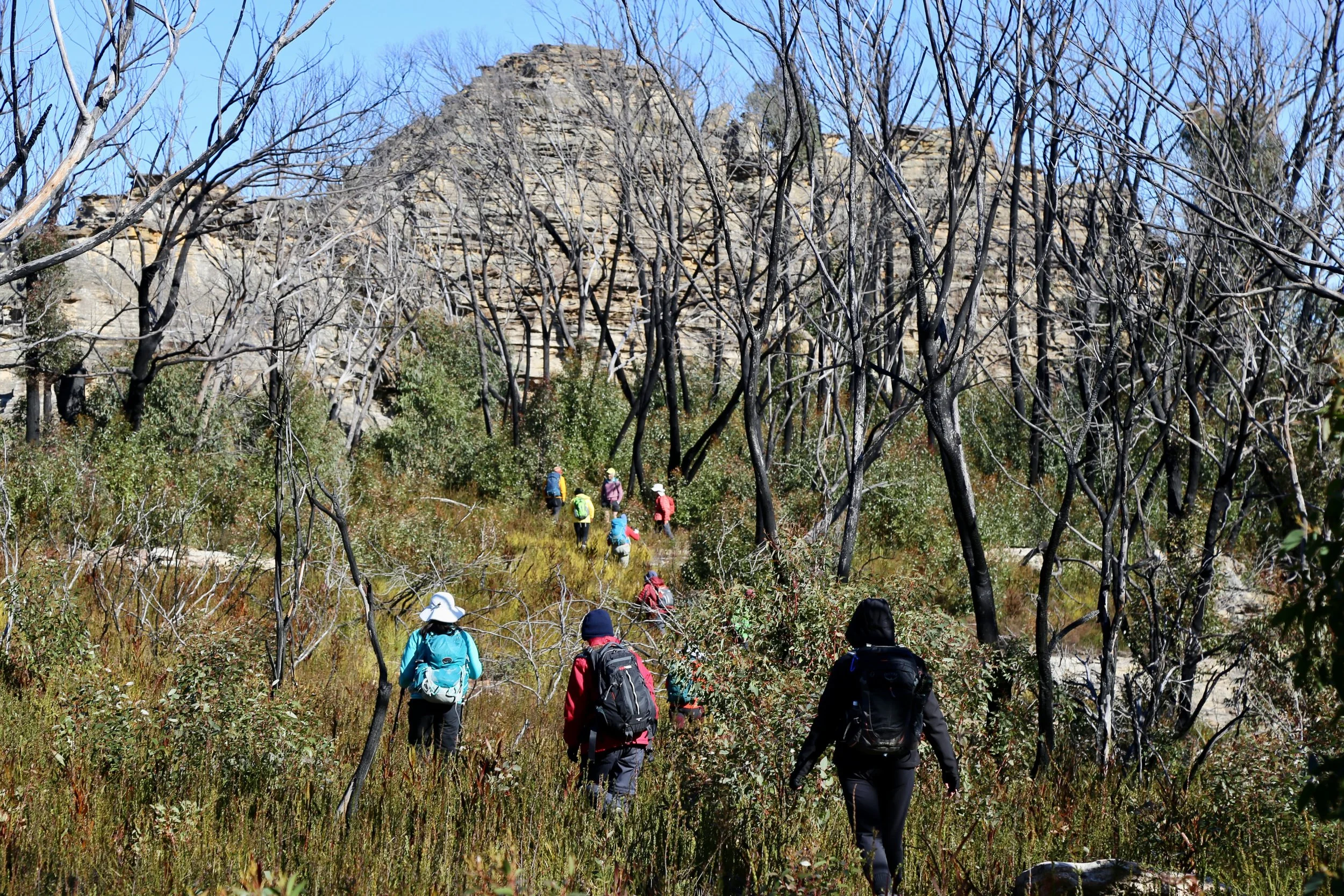
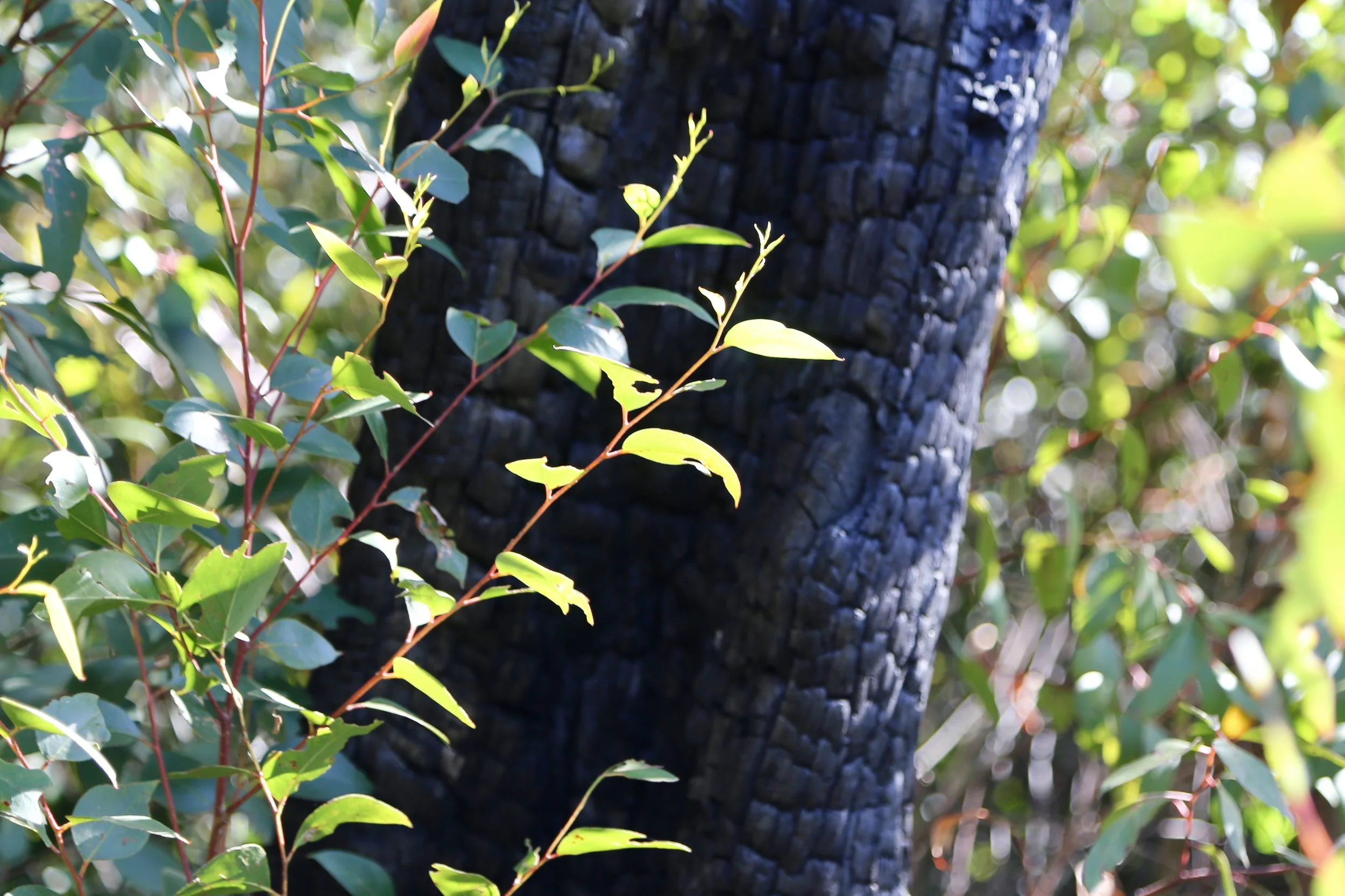
Led by Mark Goodson, we visited Donkey Mountain in 2022, not long after the area reopened following the devastating 2019–2020 bushfires. Much of the mountain had burned heavily. Across the summit were blackened trunks, fallen timber and slopes filled with dead trees, while many surviving eucalypts were pushing out dense epicormic growth directly from their trunks and branches.
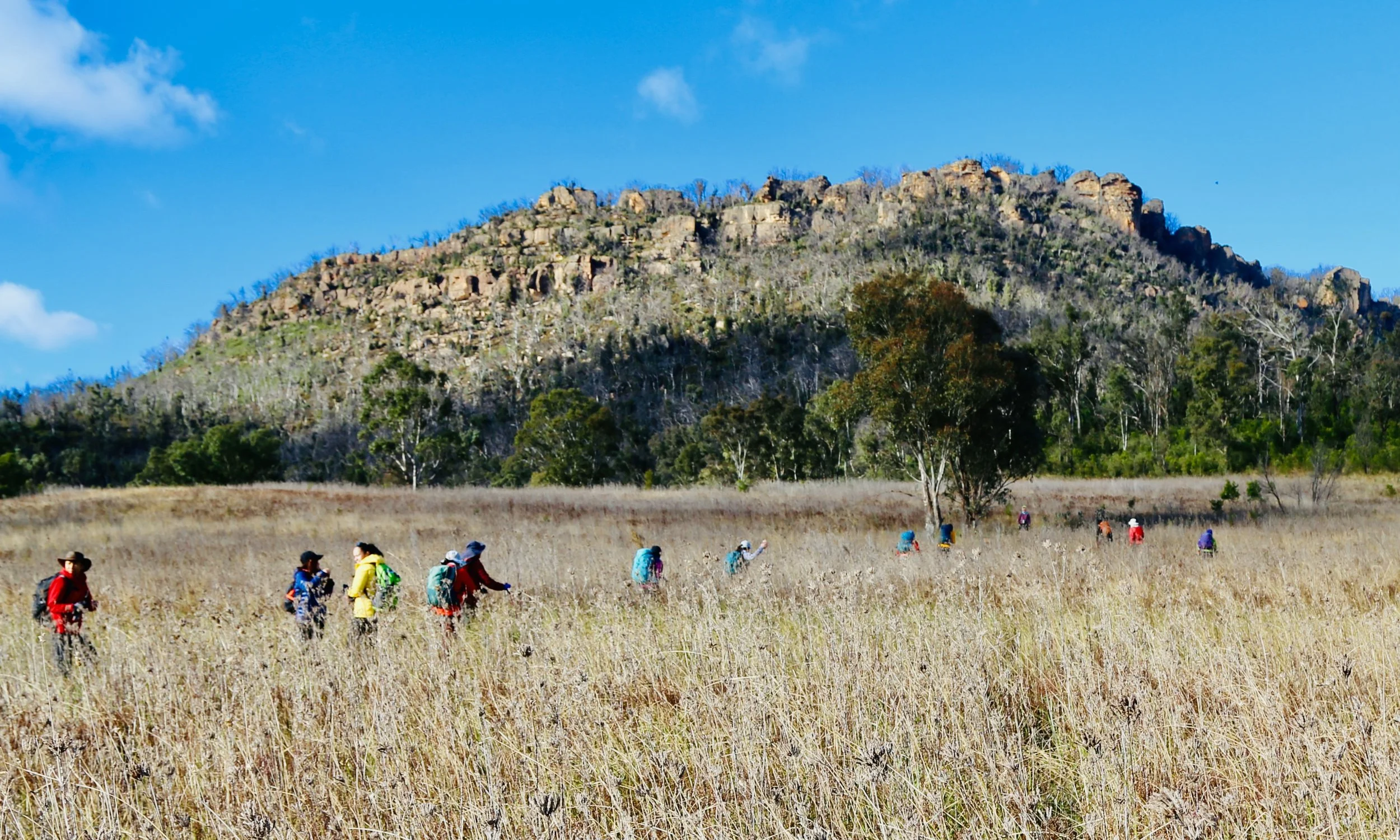
Our crisp winter morning approach to Donkey Mountain
The regrowth was astonishingly fast.
In places, it had already become thick enough to slow progress to a crawl. Several sections of the mountain that older trip reports describe as relatively open had become difficult or nearly impenetrable, forcing us to turn back more than once and retrace our steps through the slot canyons. Other sections, though, seemed untouched — cool sandstone corridors and sheltered pagoda complexes that had escaped the worst of the fire.
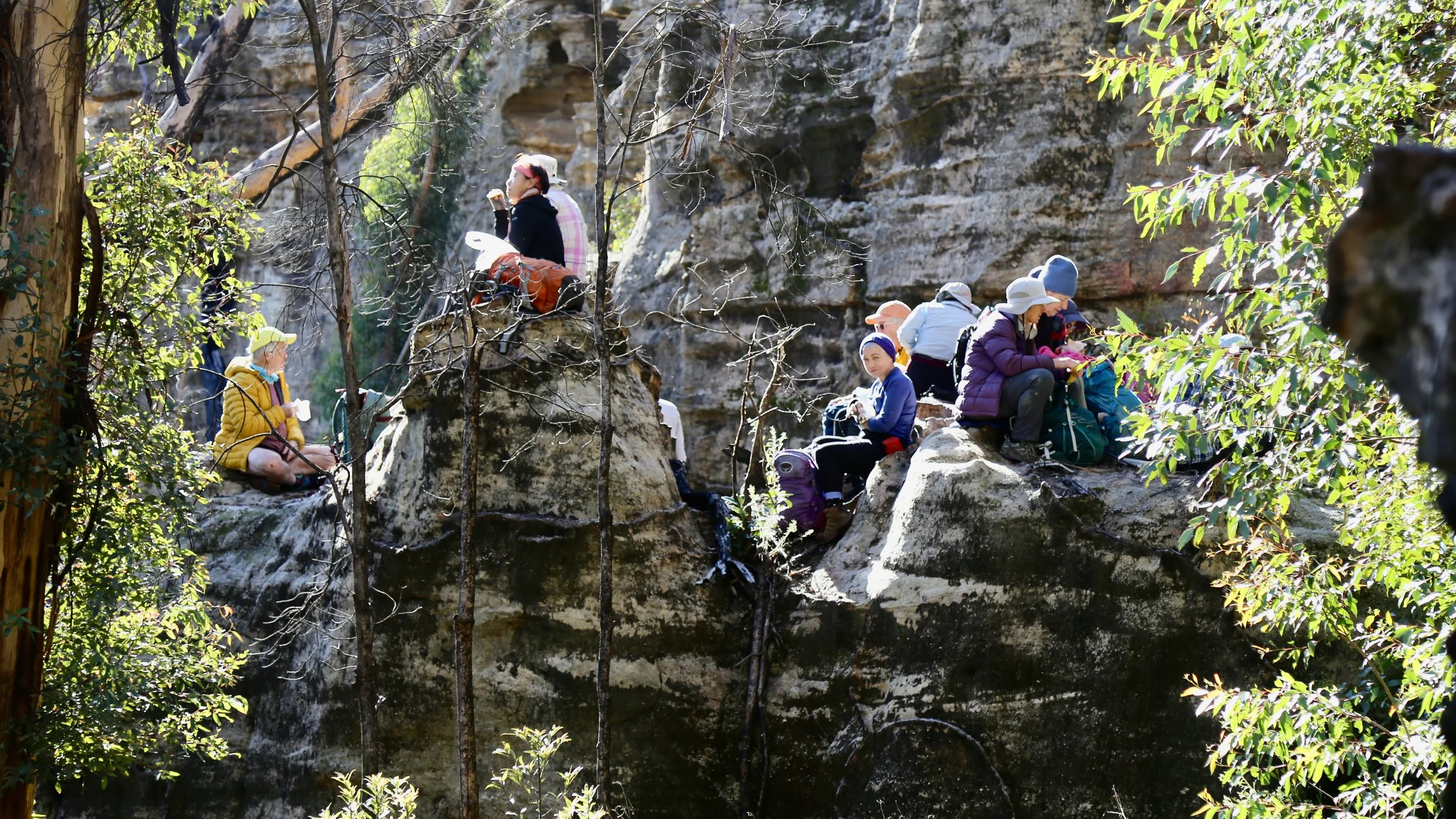
We were a large group, and despite the difficult conditions, the walk carried an atmosphere that was more exploratory than serious. Donkey Mountain encourages that. The summit never feels linear. It pulls you sideways into hidden corridors and narrow cracks between pagodas, where the landscape constantly changes character.
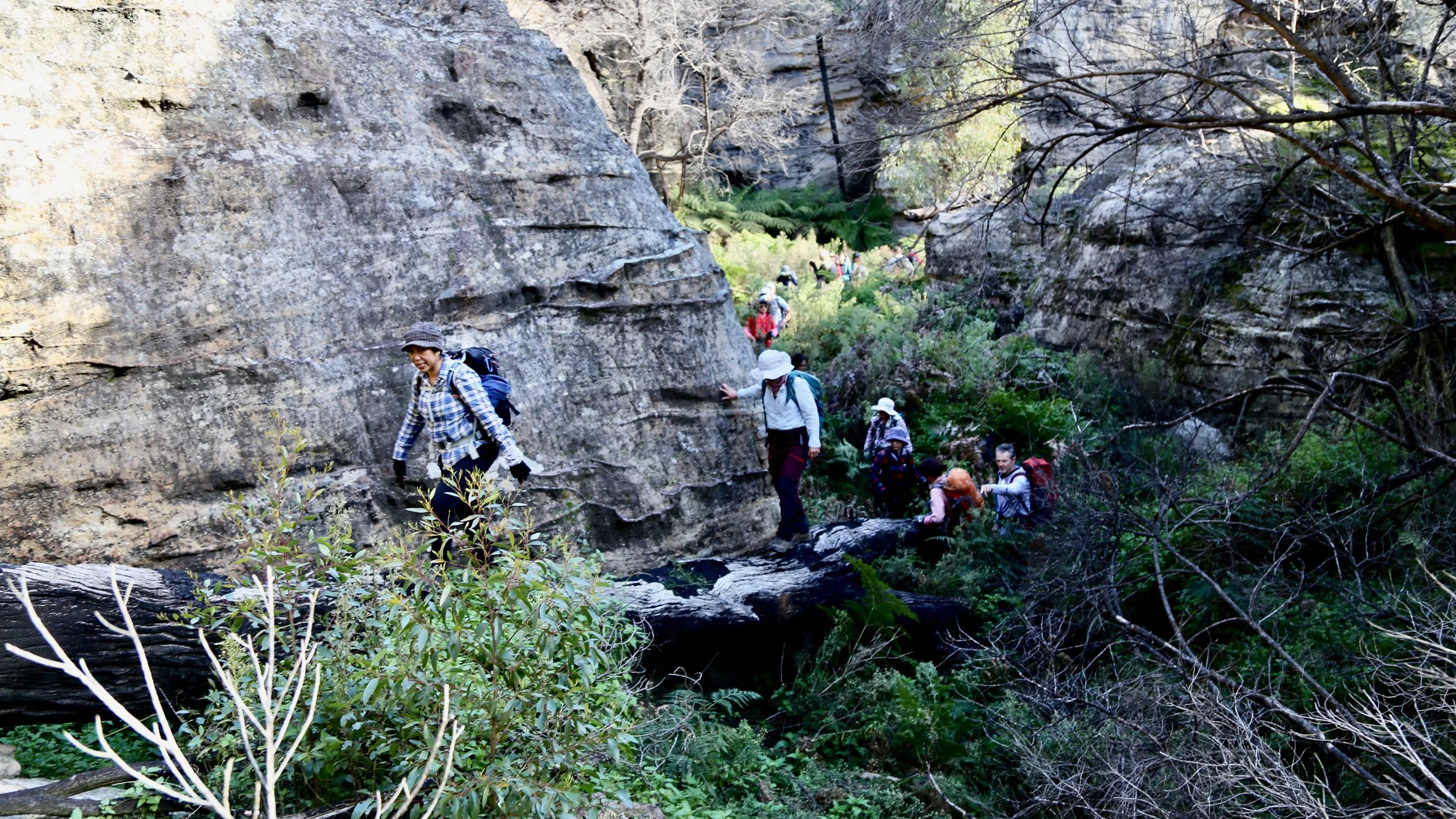
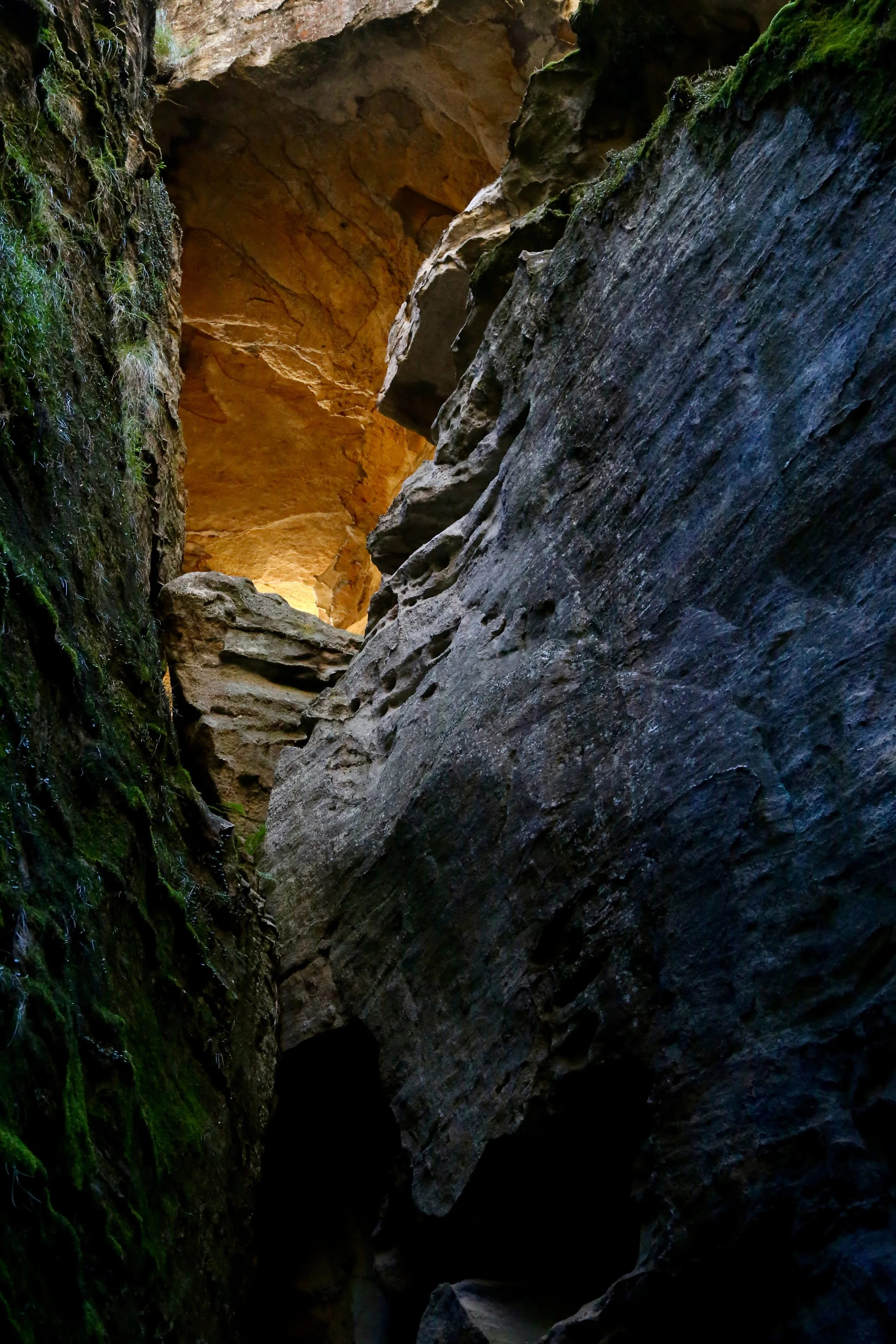
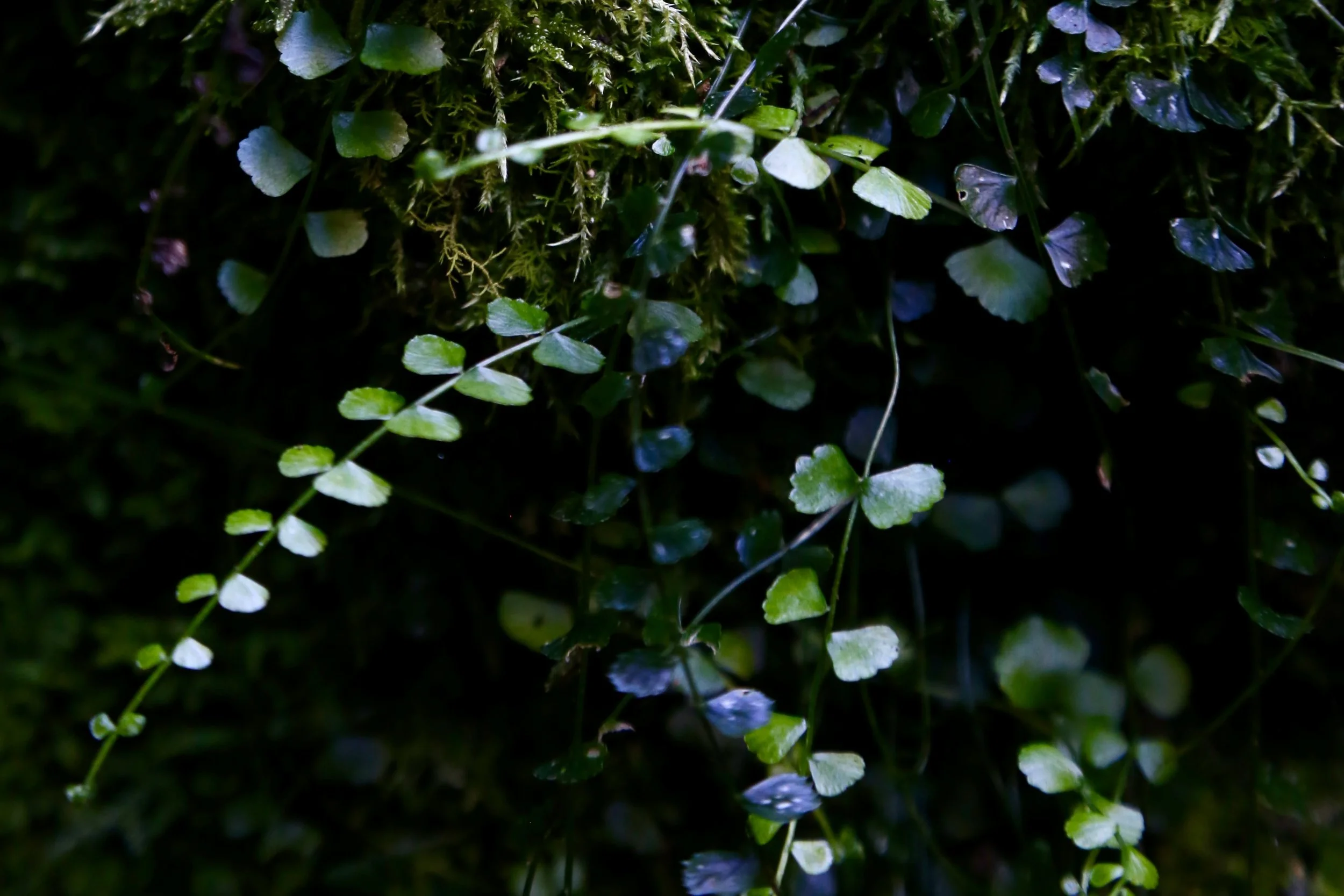
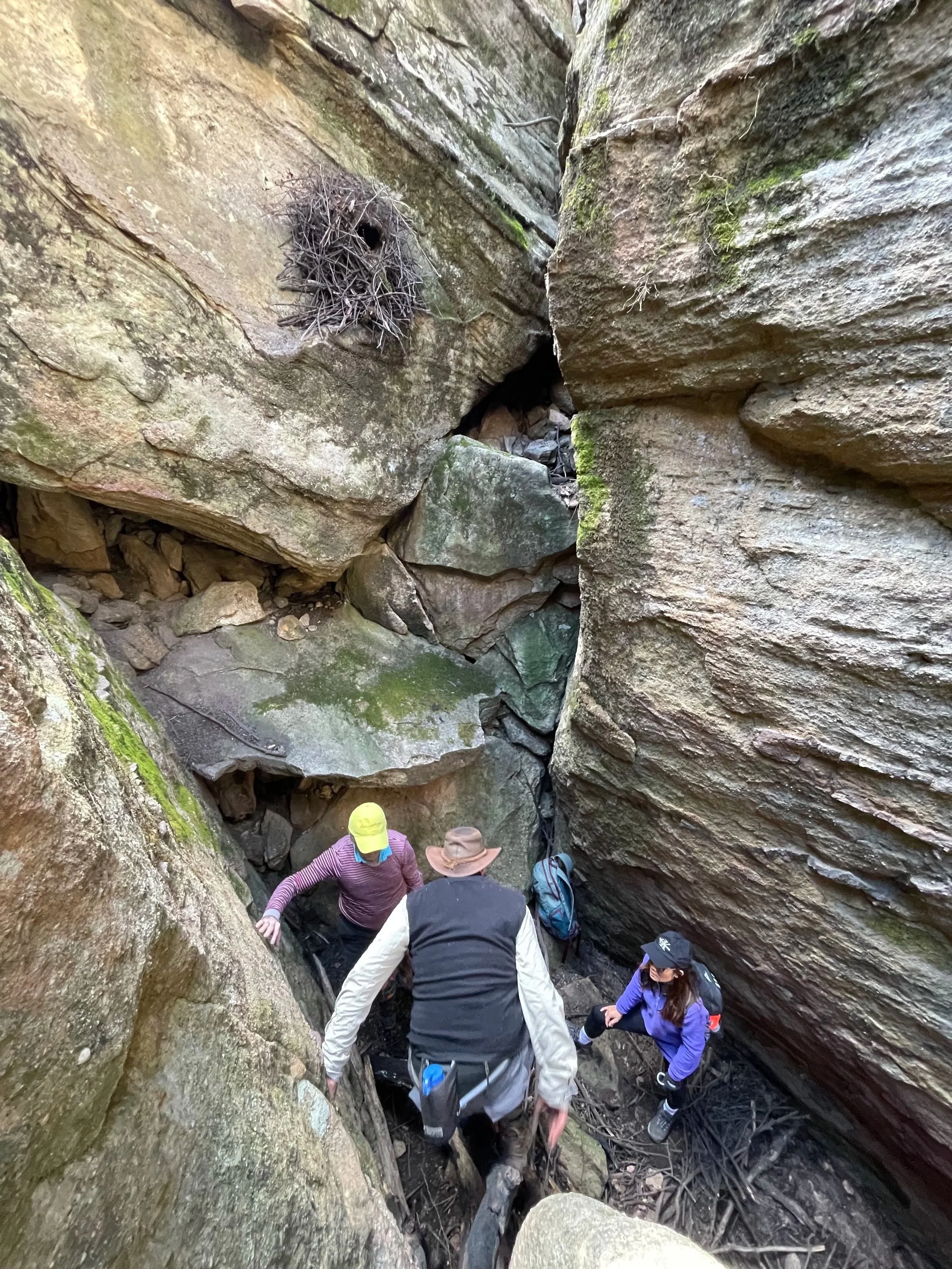
Some slots narrowed to shoulder width before opening suddenly into mossy chambers and fern-lined passageways. In sheltered cliff crevices we came across several lyrebird nests perched improbably high..
Other slots ended abruptly in collapsed rock or thick regrowth. Several passages looked impossible until the final few metres revealed a narrow route through.
At times, it was hard to tell whether we were moving forward at all.
The summit felt less like a mountain than a maze.
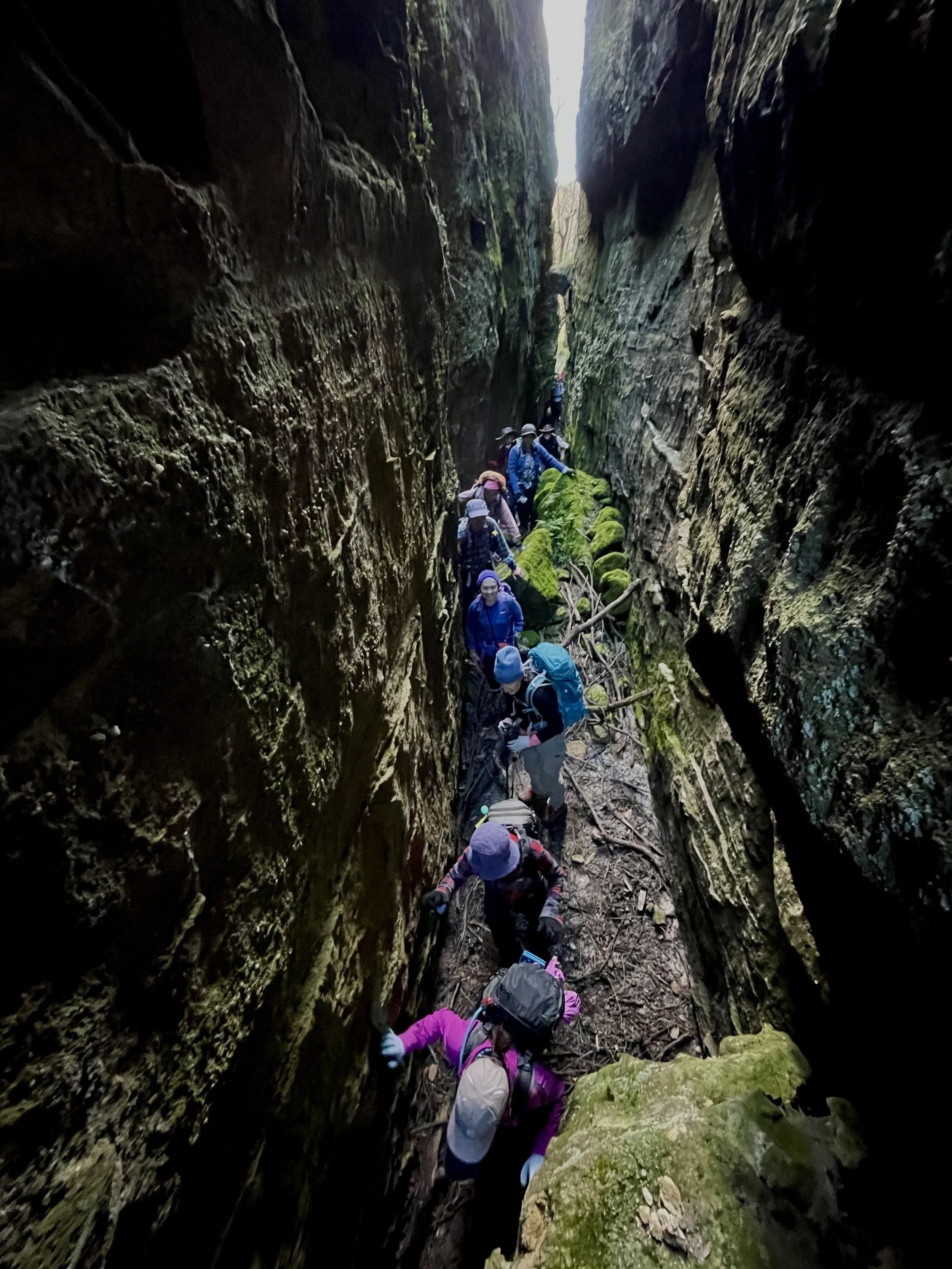
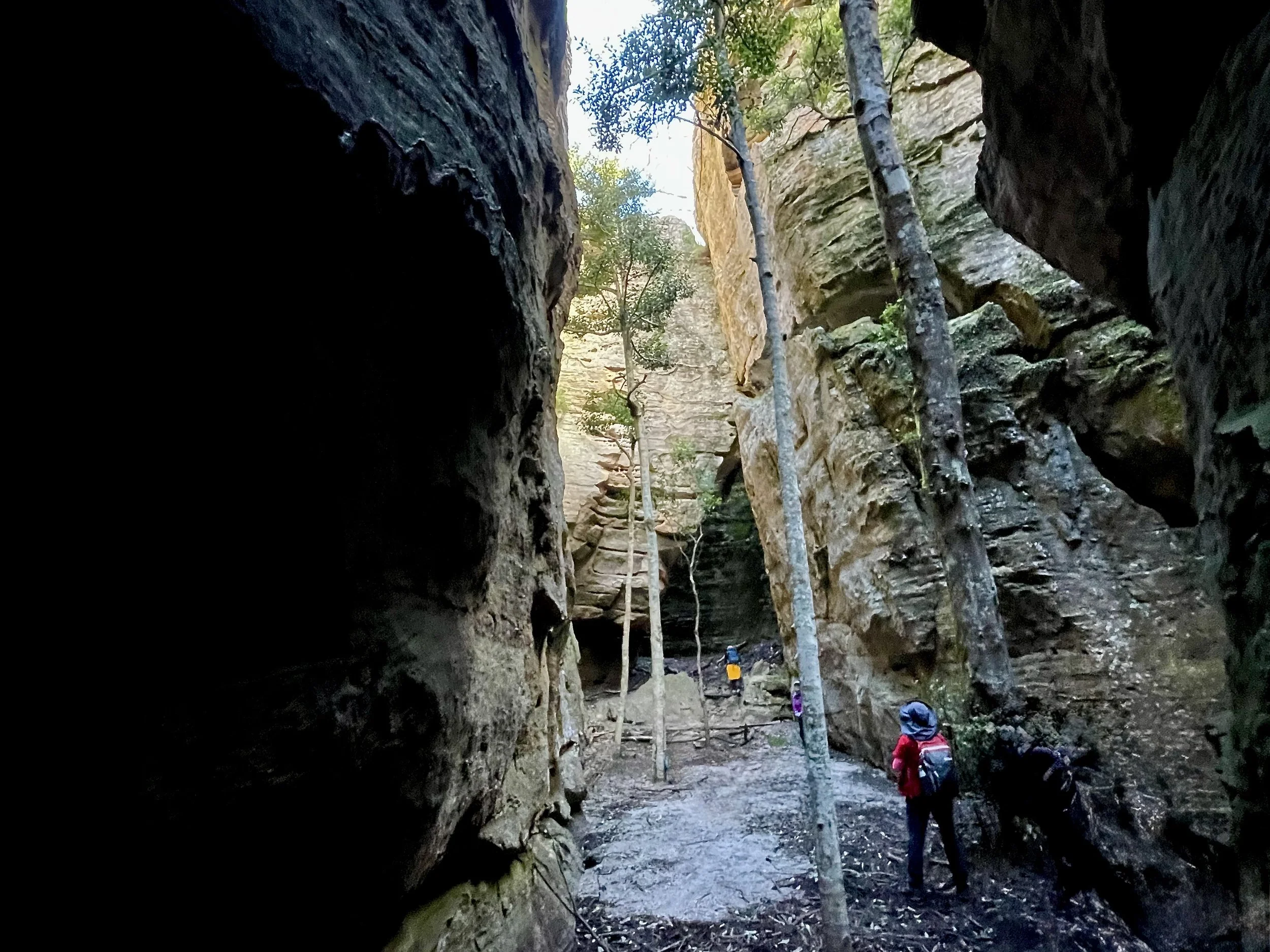
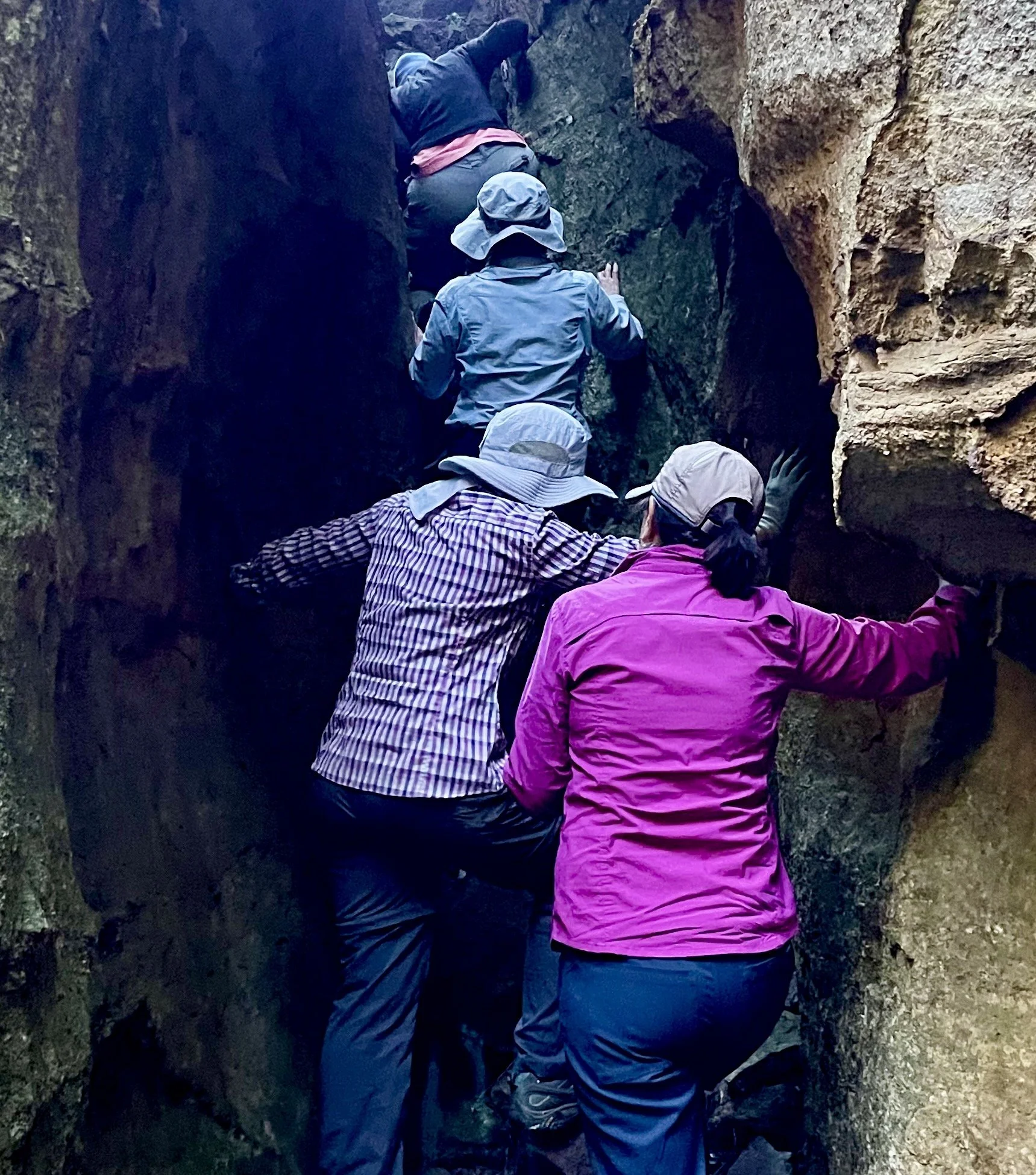
During the day we visited features known as the Green Room and the Grand Hall — enormous sandstone chambers hidden within the pagodas. Moving between them involved weaving through dry slot canyons, ramps, overhangs and sections of thick regrowth where progress became frustratingly slow. Cold air lingered inside the deeper chambers even by mid-afternoon.
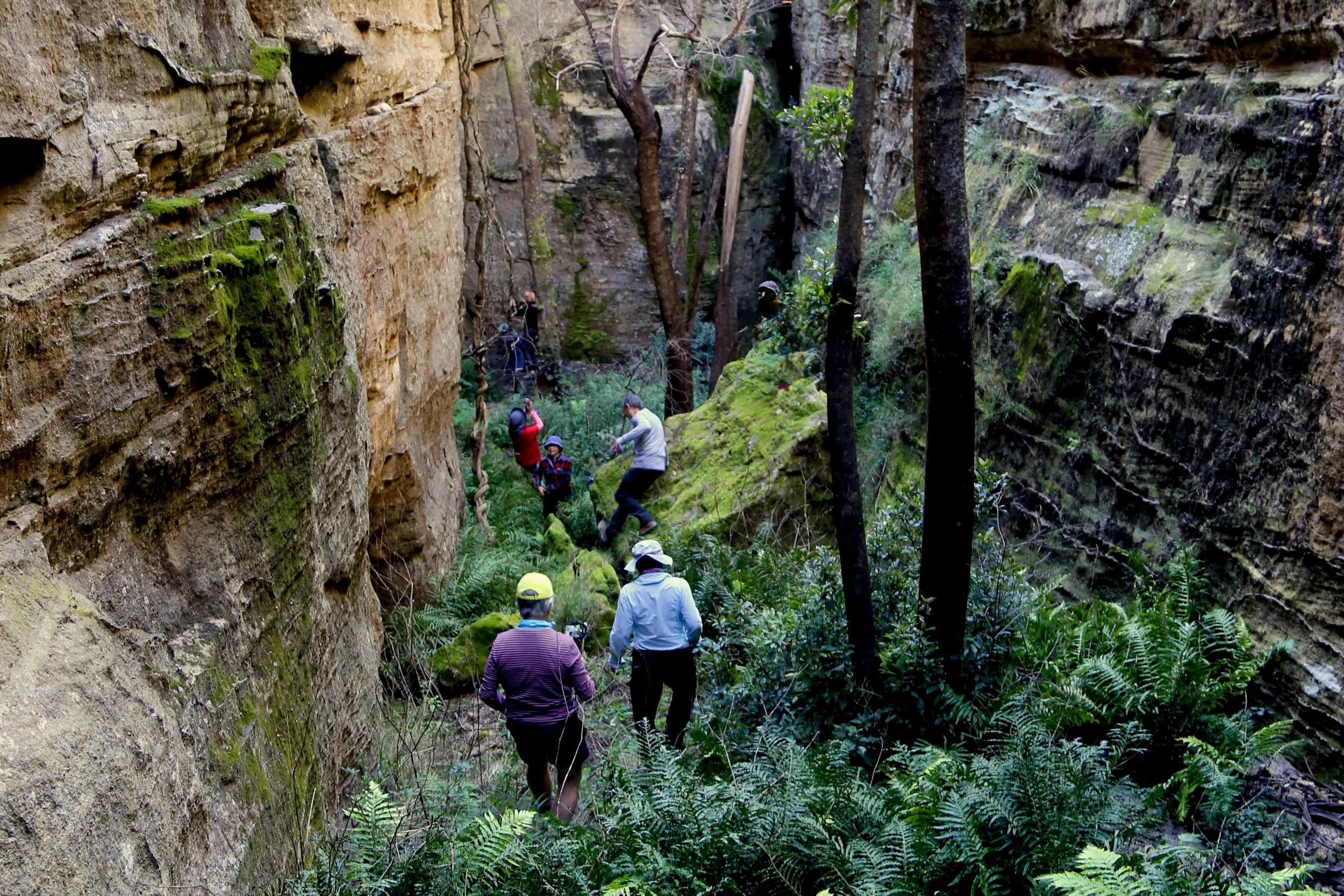
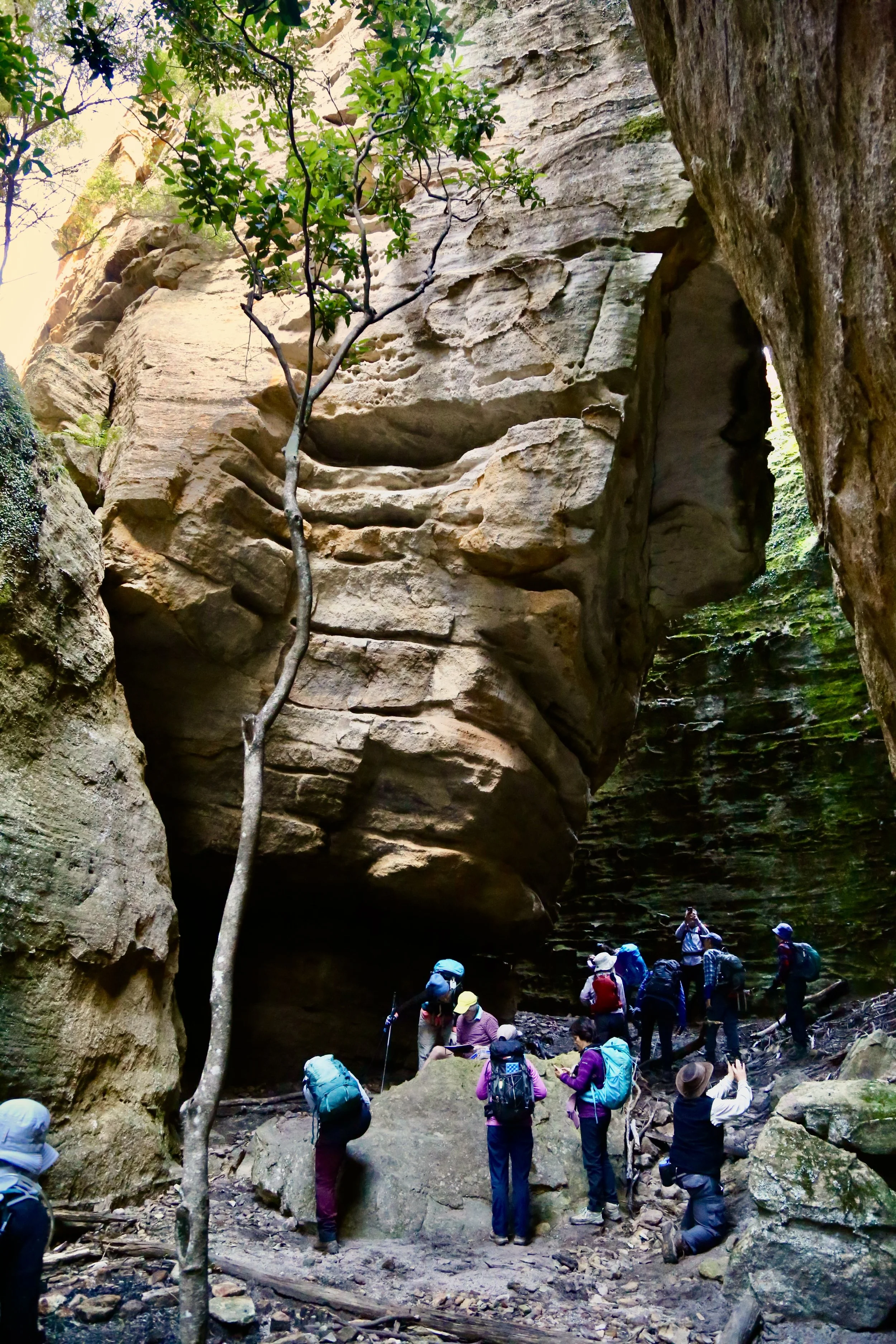
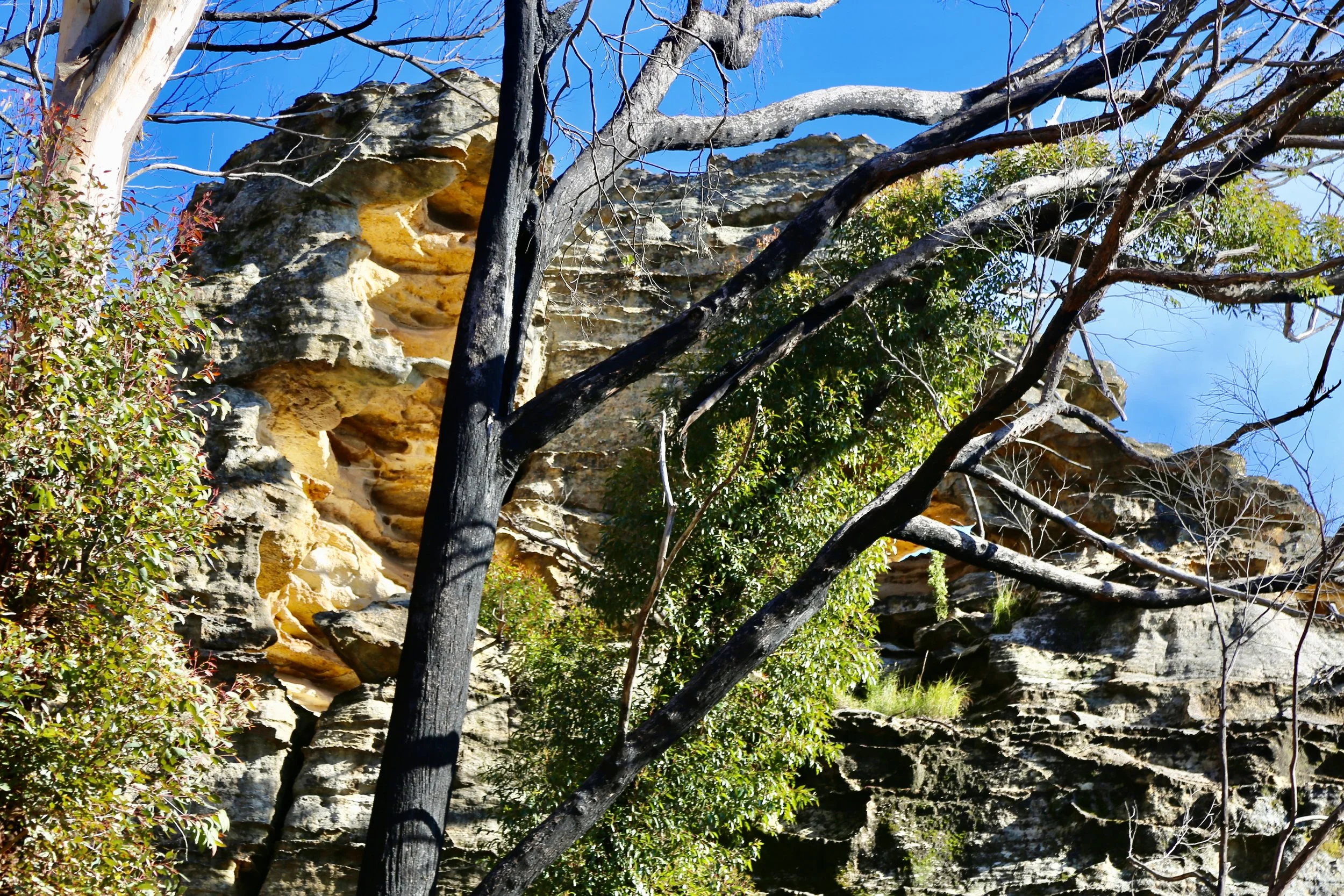
The sandstone itself was extraordinary throughout: sculpted walls, narrow tunnels and stacked pagodas shaped over immense spans of time by erosion and collapse. Entire walls appeared carved rather than weathered.
The views were equally memorable. From the western cliffs the Wolgan Valley opened out in enormous layers of farmland, forest and escarpment stretching toward the cliffs of the Wolgan–Capertee Divide. Cold wind tore across the exposed rock while we stopped for lunch overlooking the valley. Despite the sunshine, the weather remained bitterly cold all day.
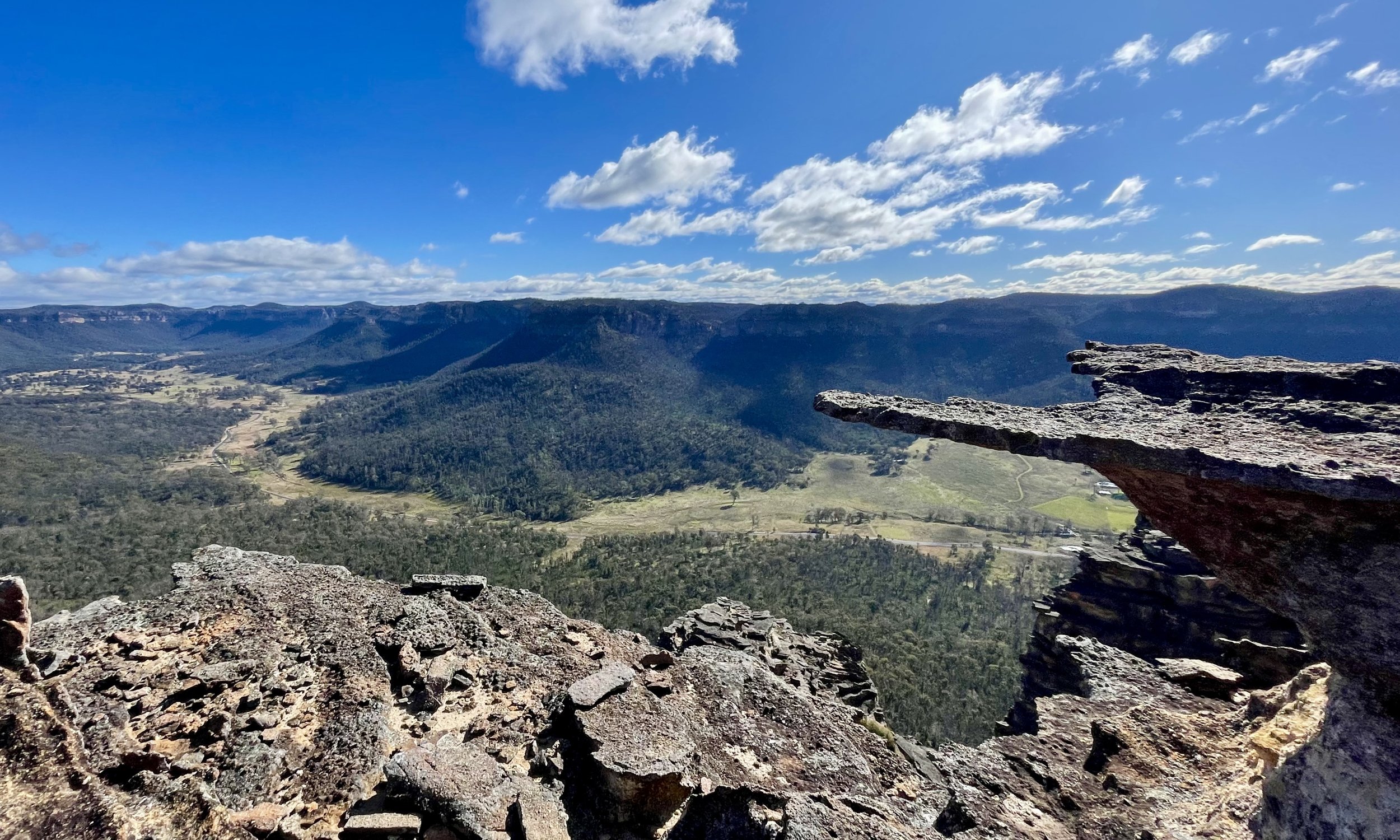
Looking east across the Wolgan Valley to the Wolgan—Capertee Divide
To the east were equally expansive views toward Emirates One&Only Wolgan Valley, sitting improbably small beneath the surrounding sandstone wilderness.
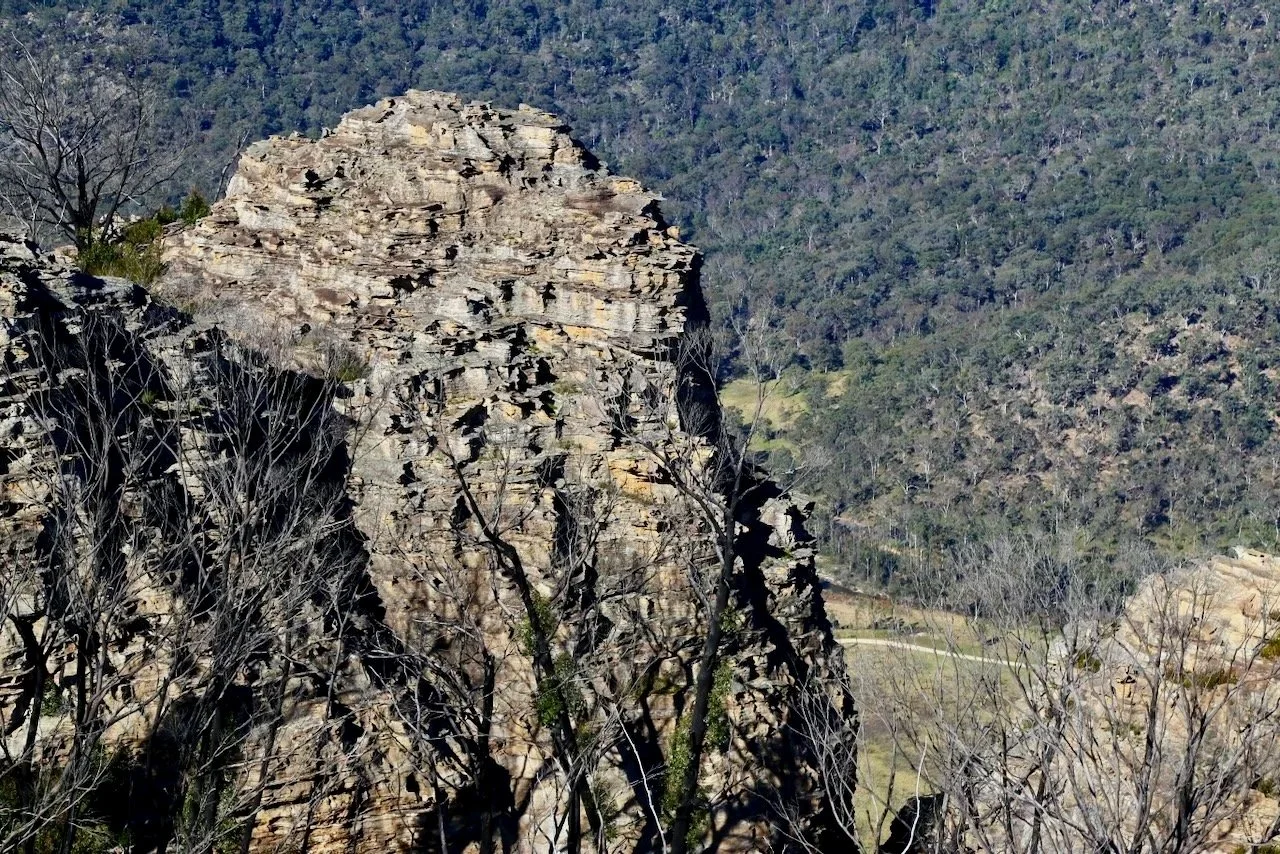
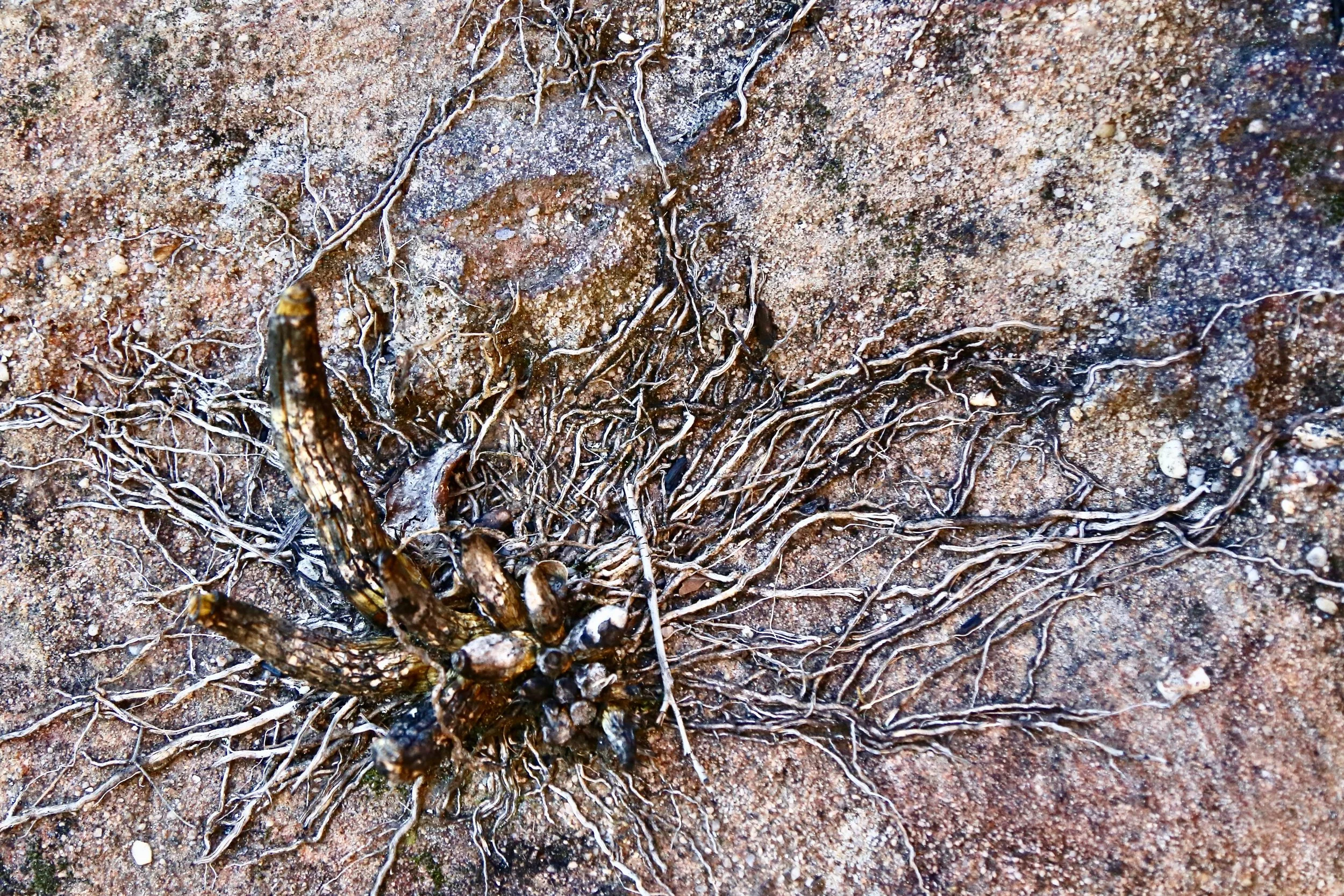
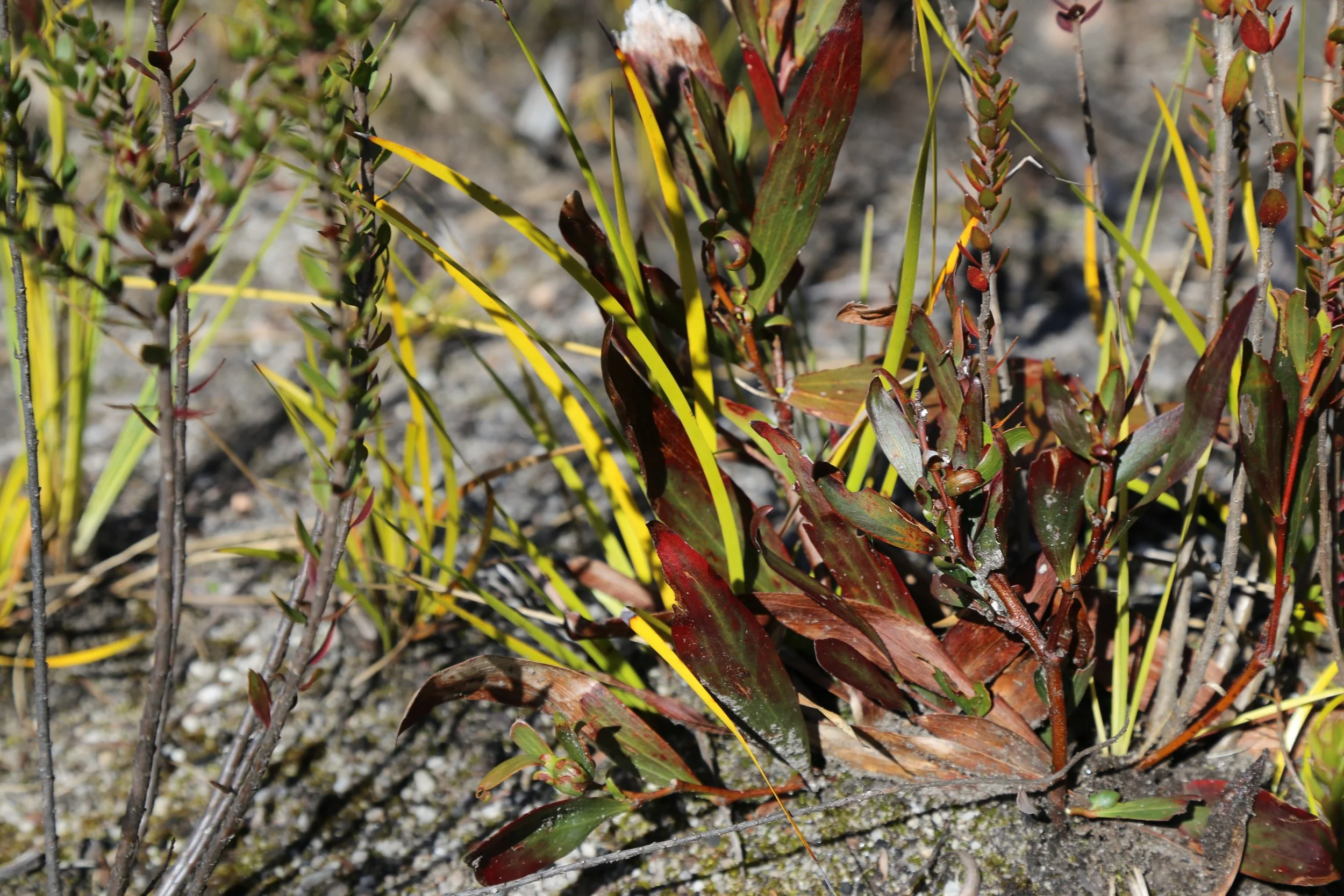
We came across Pagoda Daisies — Ozothamnus sp. — growing among the pagodas and sandstone shelves, small alpine-like shrubs reappearing through the fire-affected country.
What many people remember most about Donkey Mountain is the summit itself. It is surprisingly easy to lose any clear sense of direction. The mountain is not especially large on a map, yet once inside the pagodas and slots, the terrain seems to fold endlessly inward. Light disappears quickly in the deeper corridors, and every opening suggests another hidden chamber somewhere beyond it.
Even after a full day on the mountain, we had explored only a small portion of the mesa. Entire sections of pagodas and hidden corridors remained unseen somewhere beyond the next ridge or slot canyon. It was obvious we would need to return — more than once — to properly understand the place.
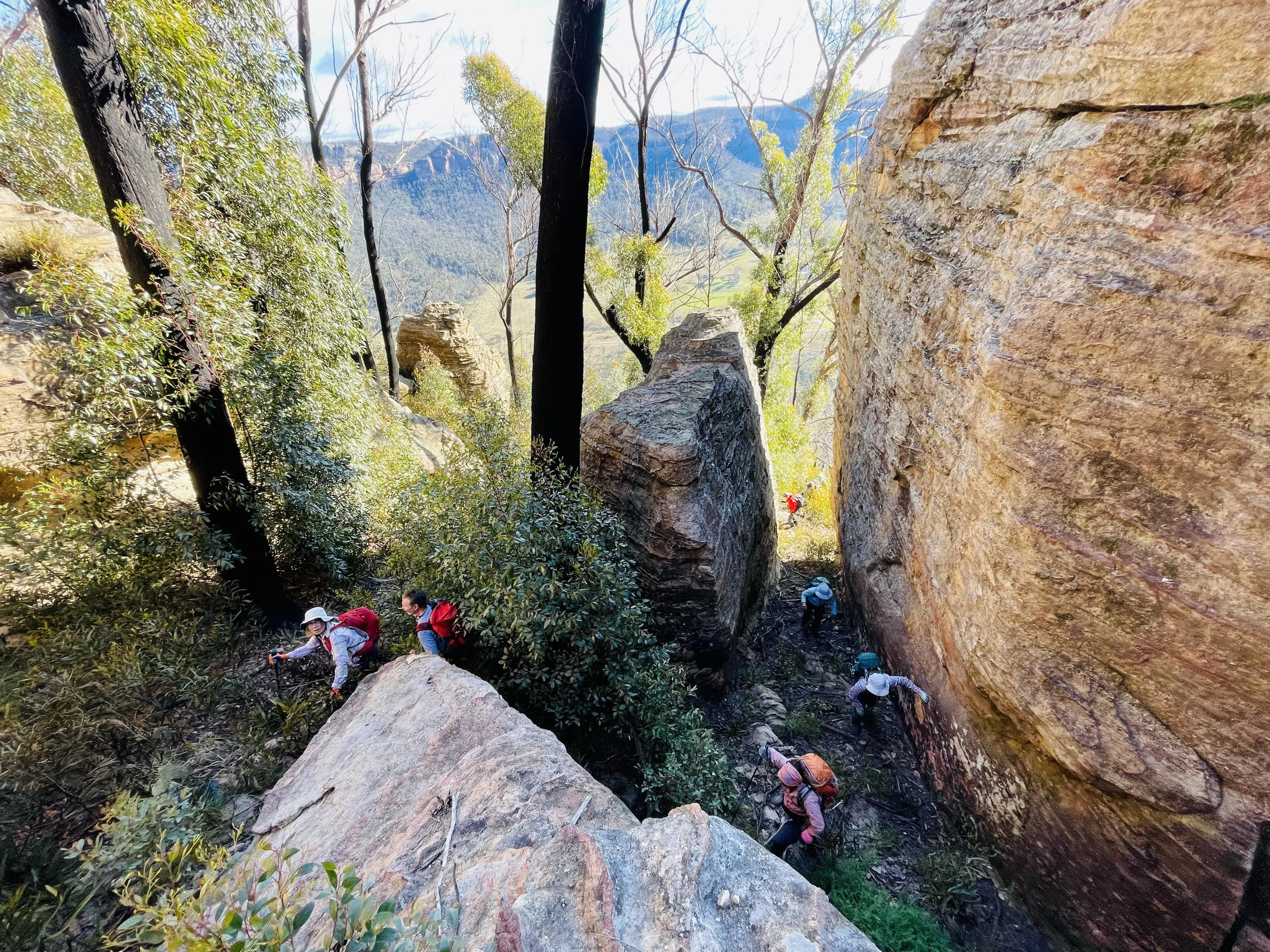
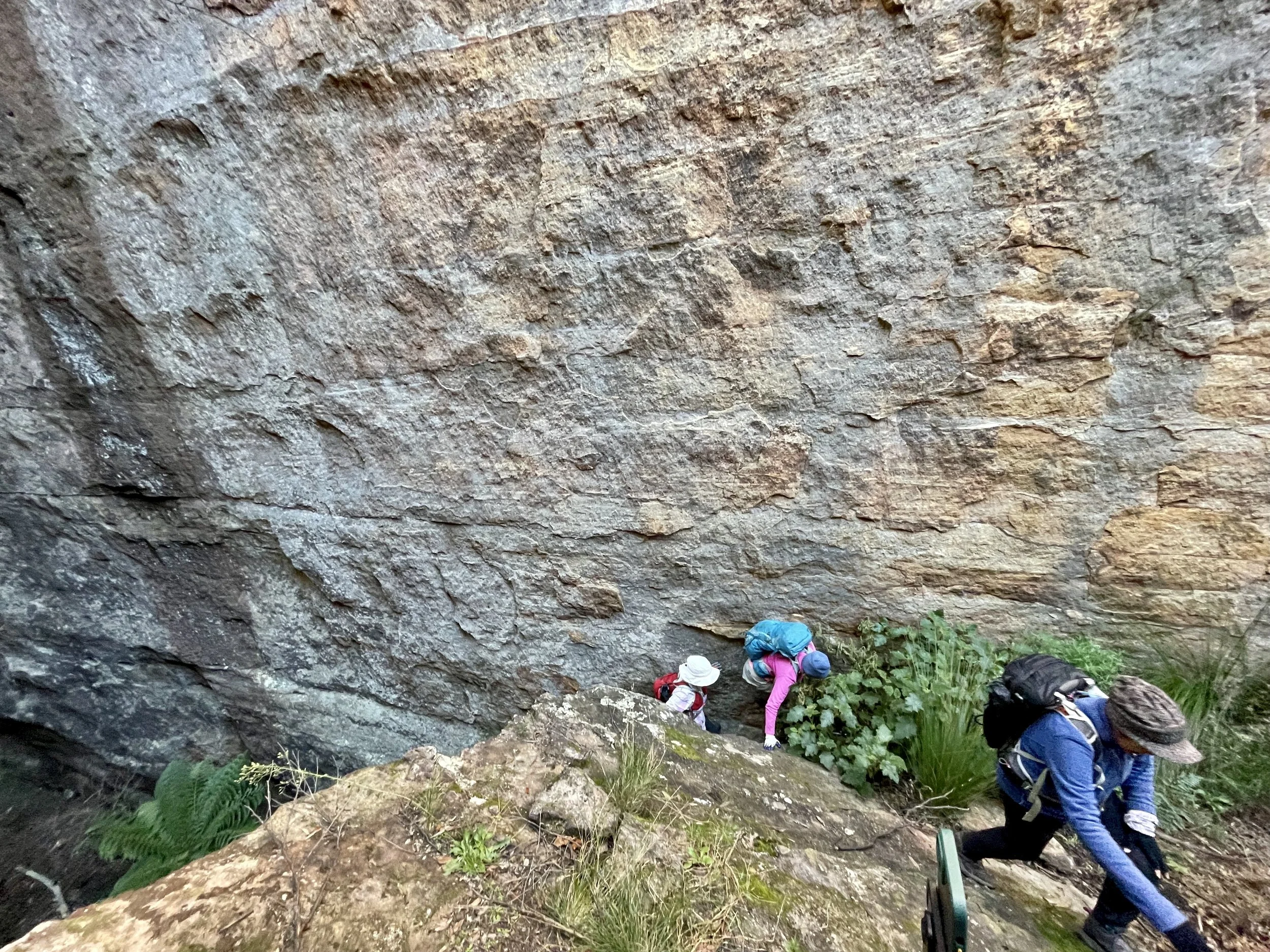
The descent off the mountain proved to be the hardest part of the day. The talus slopes below the cliffs were steep, uneven and exhausting underfoot.
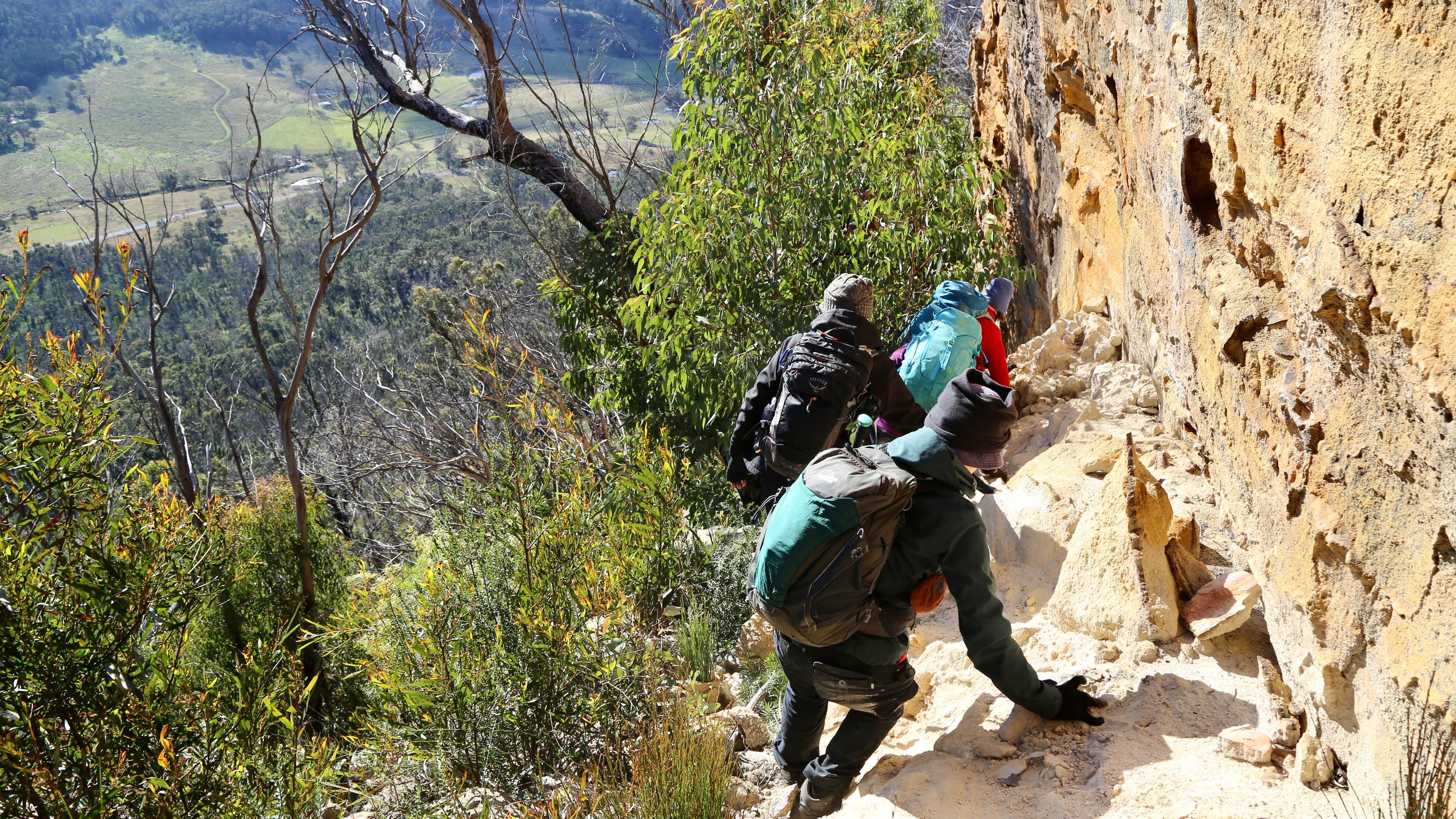
The descent off the cliff top
By the time we finally reached Wolgan Road, the day was fading into late afternoon. Across the valley, the sandstone escarpments above us glowed deep orange in the low sun, almost appearing to burn again in the light.
After a day spent inside cold shadowed canyons and fire-scarred pagoda country, the warmth of that final light felt almost unreal.
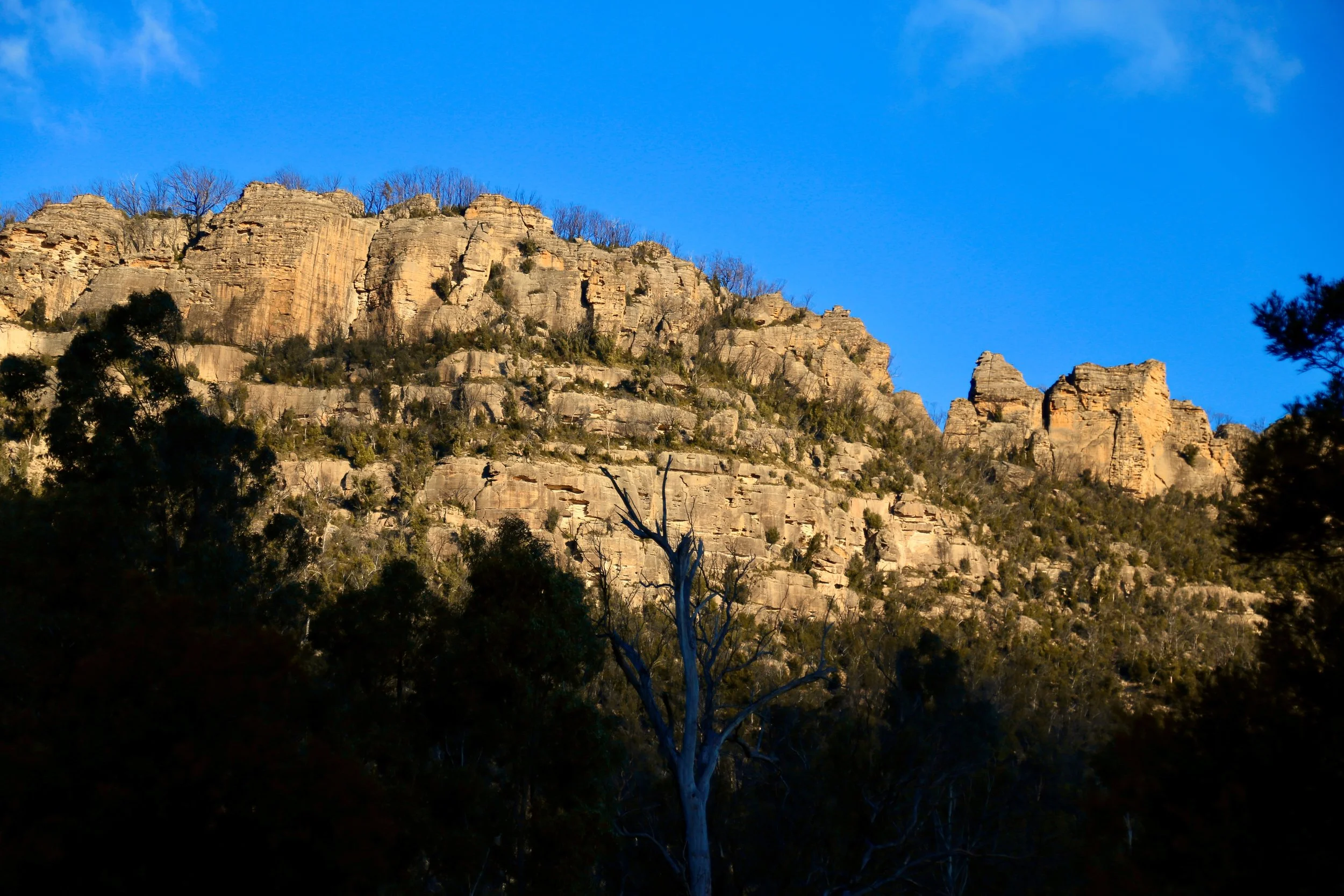
Afternoon glow picking off the sandstone and fire-torched trees
Aerial Map
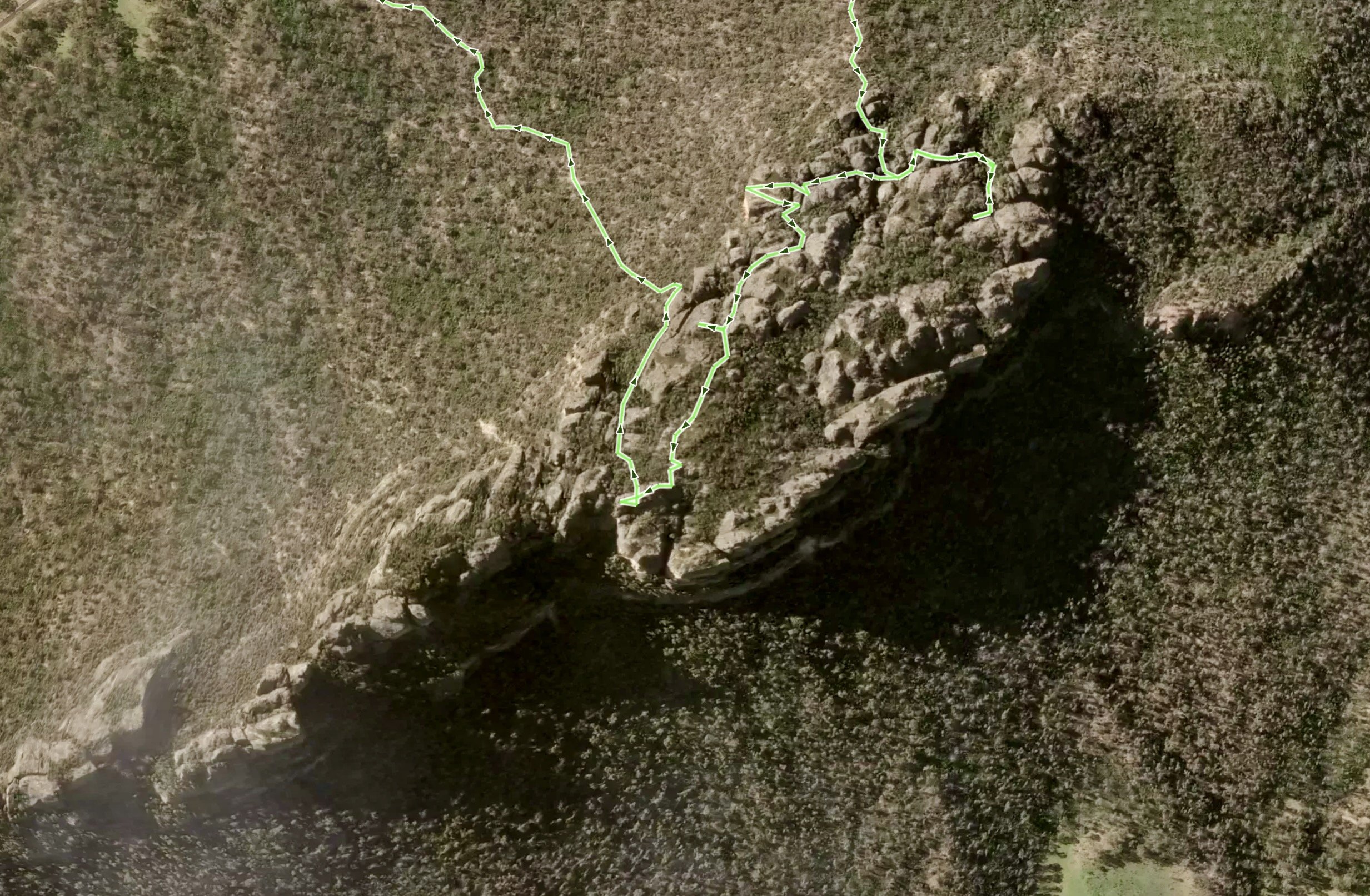
Trace recorded by Sandstone Symphony. Map data and imagery provided by Gaia GPS (TrailBehind, Inc.)
References and Further Reading
Keats, Michael, 1940- & Fox, Brian. (2015). The Gardens of Stone National Park and beyond : bushwalks on the Northern Newnes Plateau; plus regional flora and fauna. Book 6 / Michael Keats and Brian Fox. Pymble, NSW: Keats Holdings
Dingo Gap. Donkey Mountain. dingogap.net.au